
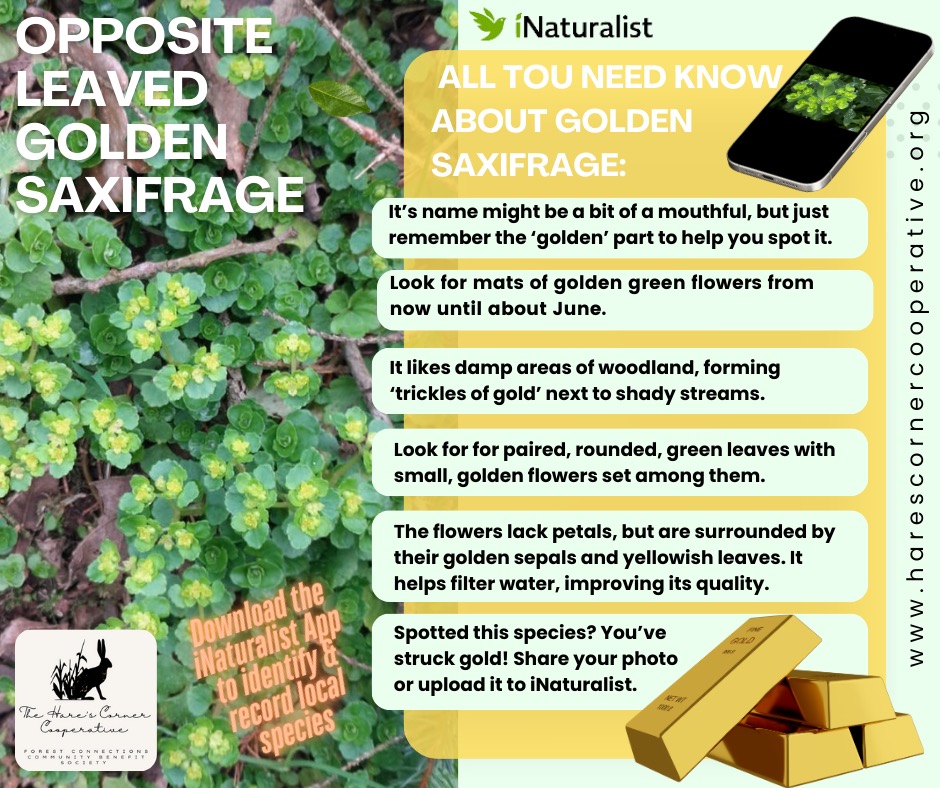
Opposite-Leaved Golden Saxifrage (Chrysosplenium oppositifolium) is a tiny but fascinating plant that thrives in shaded, damp woodlands, particularly along stream edges and wet banks. It often forms dense, lush mats of greenery on the forest floor, where moisture remains high. Though small and easily overlooked, this plant plays an important role in the woodland ecosystem.
One of its key identifying features is its opposite leaves, which are paired directly across from each other on the stem. This sets it apart from its close relative, Alternate-Leaved Golden Saxifrage. Its small, rounded leaves are accompanied by tiny yellow-green flowers, which bloom between March and May. It prefers shady, wet environments such as woodland streams, marshy ground, and damp rock crevices.
Ecologically, Opposite-Leaved Golden Saxifrage provides an early source of nectar for small pollinators like flies and beetles. It also helps to stabilise soil along stream edges, preventing erosion and contributing to the health of the surrounding habitat. The plant’s dense growth offers valuable ground cover, providing shelter for tiny invertebrates.
To spot this hidden woodland gem, look for low-growing mats of greenery near woodland streams and damp paths in early spring. Though it may seem insignificant at first glance, a closer look reveals its delicate beauty and unique leaf arrangement. Next time you’re exploring a shaded, damp woodland, take a moment to appreciate this tiny but vital part of the ecosystem.
 Hare's Corner Cooperative
Leave a Reply