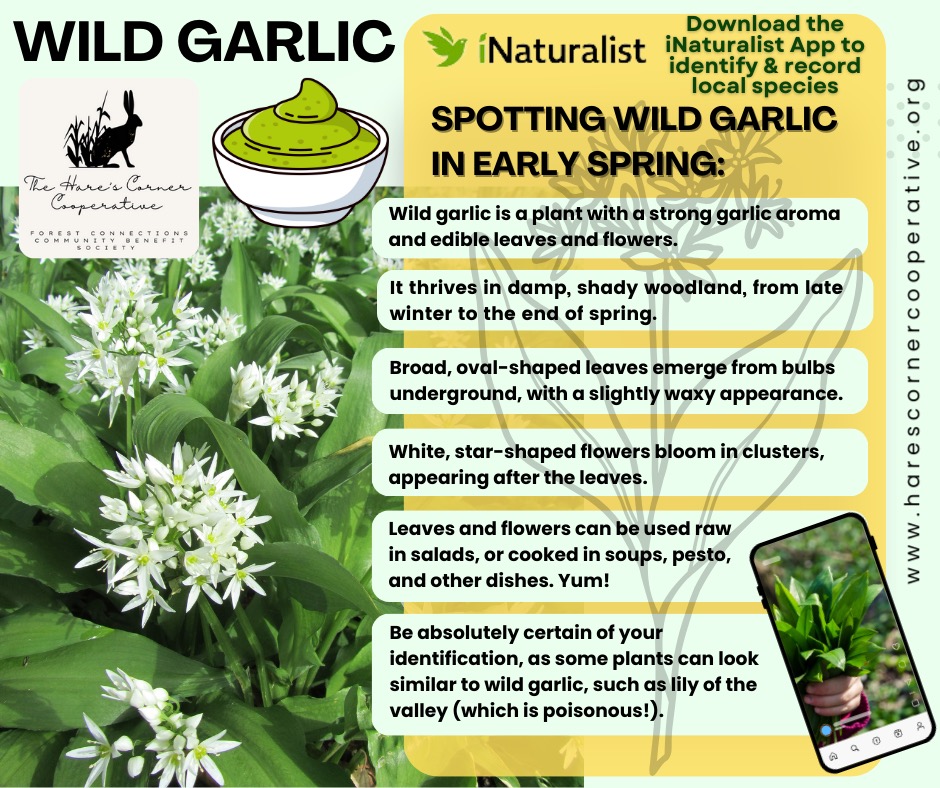
One of the most enchanting signs of spring is the appearance of wild garlic (Allium ursinum), also known as ramsons. Found carpeting the ground in shady woodlands and damp riverbanks, this leafy green plant is as beautiful as it is useful, and hard to miss once its unmistakable garlicky scent fills the air.
Wild garlic usually begins to appear between March and May, depending on the weather. It thrives in moist, shaded spots and is easily recognised by its long, pointed green leaves and clusters of delicate white, star-shaped flowers. The best way to identify it is by gently rubbing a leaf between your fingers, if it smells like garlic, you’ve found it!
But wild garlic isn’t just a treat for the senses. It’s also an important plant for wildlife. Its early flowers provide a valuable food source for bees, hoverflies, and other pollinators at a time when not much else is in bloom. The dense foliage offers cover for insects and small woodland creatures too, making it an essential part of the spring ecosystem.
For people, wild garlic is a popular plant among foragers. The leaves, flowers, and unopened buds are all edible and can be used to add a fresh, garlicky flavour to pestos, soups, salads, and breads. However, it’s important to forage responsibly. Only pick small amounts from abundant patches, always make sure you’ve positively identified the plant, and avoid gathering near roadsides or protected areas. Be especially careful not to confuse it with similar-looking plants like lily of the valley or lords-and-ladies, which are toxic and do not smell of garlic.
The Latin name Allium ursinum comes from the word “ursus,” meaning bear. It’s believed that European brown bears once dug up wild garlic roots in the spring to replenish their strength after hibernation, a lovely image of nature’s own seasonal cycle.
Whether you’re wandering through a woodland, enjoying the scent on the breeze, or adding a few leaves to your dinner, wild garlic is one of spring’s simple pleasures.
 Hare's Corner Cooperative
Leave a Reply