Few sights capture the magic of spring like a bluebell wood in full bloom. With delicate, nodding heads and a sea of violet blue flowers stretching through the trees, bluebells are one of our most beloved wildflowers, and a sure sign that the woodland is waking up after winter.
In Garvagh Forest, one of the best places to enjoy this spring spectacle is the area around the pyramid. Each year, this peaceful spot transforms into a soft blue carpet, with thousands of native bluebells blooming beneath the trees. If you visit during late April or May, you’re likely to be met by their sweet, honey like scent and the gentle hum of bees taking full advantage of the nectar.
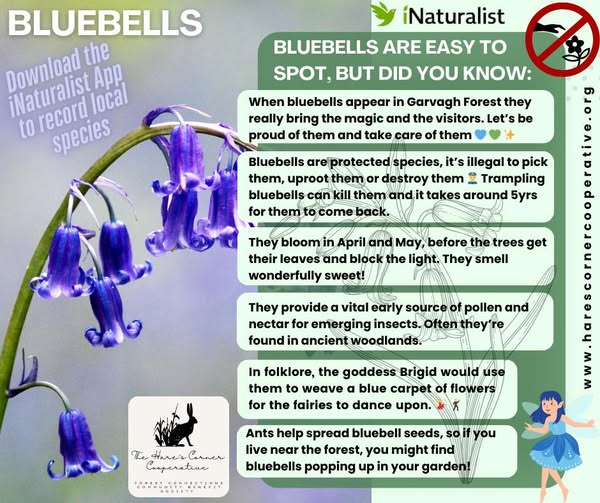
The native bluebell (Hyacinthoides non-scripta) grows in ancient and undisturbed woodlands, shaded hedgerows, and quiet glades. It’s easy to identify by its narrow, arching stem, drooping, deep violet blue flowers mostly hanging on one side, and cream coloured pollen. The petal tips gently curl back, giving the flower its iconic bell like shape.
Bluebells are not just beautiful, they’re important early nectar sources for pollinators like bees, butterflies, and hoverflies. They bloom before the tree canopy closes, making the most of the spring light on the woodland floor. Because they spread slowly and prefer undisturbed soil, bluebells are a strong indicator of ancient woodland, a living link to the forest’s long history.
Sadly, native bluebells face threats from habitat loss, trampling, and the spread of the non-native Spanish bluebell (Hyacinthoides hispanica), which can hybridise with our native species. Spanish bluebells are more upright, less fragrant, and have flowers all around the stem. They’re often planted in gardens but can easily spread into the wild and outcompete native varieties.
To help protect bluebells:
- Stick to marked paths, especially in places like Garvagh Forest, to avoid damaging delicate bulbs underfoot.
- Avoid picking or digging up bluebells, as they’re protected in many areas.
- If gardening, choose native bluebells or carefully remove non-native ones to prevent hybridisation.
So next time you’re in Garvagh Forest, take a slow walk around the pyramid trail and soak in the sight and scent of the bluebells. It’s one of spring’s most peaceful and magical moments, and a gentle reminder of the beauty and fragility of our native woodlands.
 Hare's Corner Cooperative
Leave a Reply