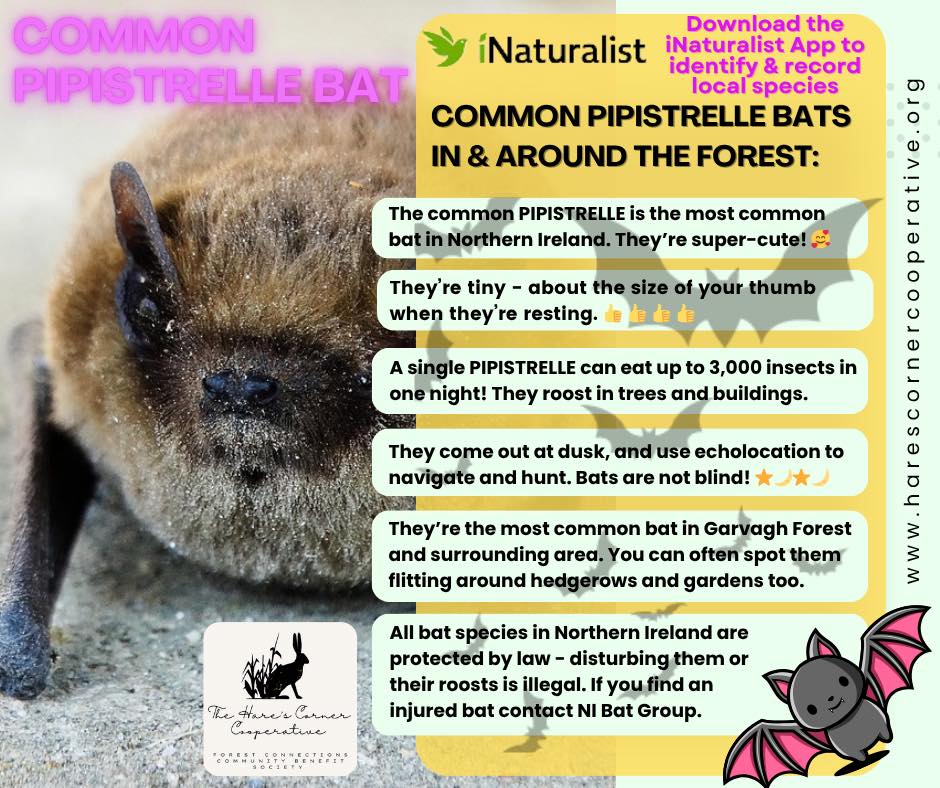
As evening falls and the last birdsong fades, a new kind of movement stirs in the sky. Look closely around dusk and you might see a small, fast shape darting and twisting through the air. It’s one of our most familiar, yet often overlooked, mammals, the common pipistrelle bat.
The common pipistrelle is the most widespread bat species across the UK and Ireland, found in towns, villages, woodlands, and along rivers and hedgerows. Despite their name, there’s nothing ordinary about them. These tiny bats weigh only 4 to 8 grams, lighter than a £1 coin, yet they can eat up to 3,000 midges and mosquitoes each night. Their quick, fluttering flight is perfectly adapted for hunting small insects, and they rely on echolocation, using high-frequency calls that bounce off objects to navigate and feed in the dark.
Pipistrelles usually begin to appear about 20 minutes after sunset, especially on warm, still evenings. If you watch the sky near trees, hedgerows, or over water, you might see them zigzagging as they chase their prey. Although their calls are too high pitched for humans to hear, bat detectors can translate them into clicks, letting us listen in on their night time world.
These bats roost in a variety of places, including under roof tiles, in old buildings, tree crevices, and bat boxes. During the summer months, females form maternity roosts, where they give birth to a single pup, usually in June or July. The young bat can fly within a few weeks, ready to start hunting on its own by late summer. As autumn arrives, pipistrelles feed heavily to build up fat reserves before entering hibernation in winter, often in sheltered nooks, caves, or tree holes.
The common pipistrelle is protected under UK and Irish law, along with all other bat species. Sadly, bats face many pressures, including loss of roost sites, declining insect populations, and light pollution. Simple actions like leaving old trees standing, installing bat boxes, or keeping garden lights off at night can make a big difference. Healthy hedgerows, ponds, and insect friendly gardens also provide vital feeding areas.
These little bats are reminders of how alive the night truly is. They are the silent guardians of our summer evenings, graceful, agile, and essential to the balance of nature.
Next time you find yourself outdoors at dusk, pause for a moment. Watch the twilight sky, listen to the quiet hum of insects, and look for the pipistrelle’s darting silhouette against the fading light. It’s a small, magical encounter that connects us to the wild rhythms of the world around us.
 Hare's Corner Cooperative
Leave a Reply